Keep important mail organized and easy to revisit later
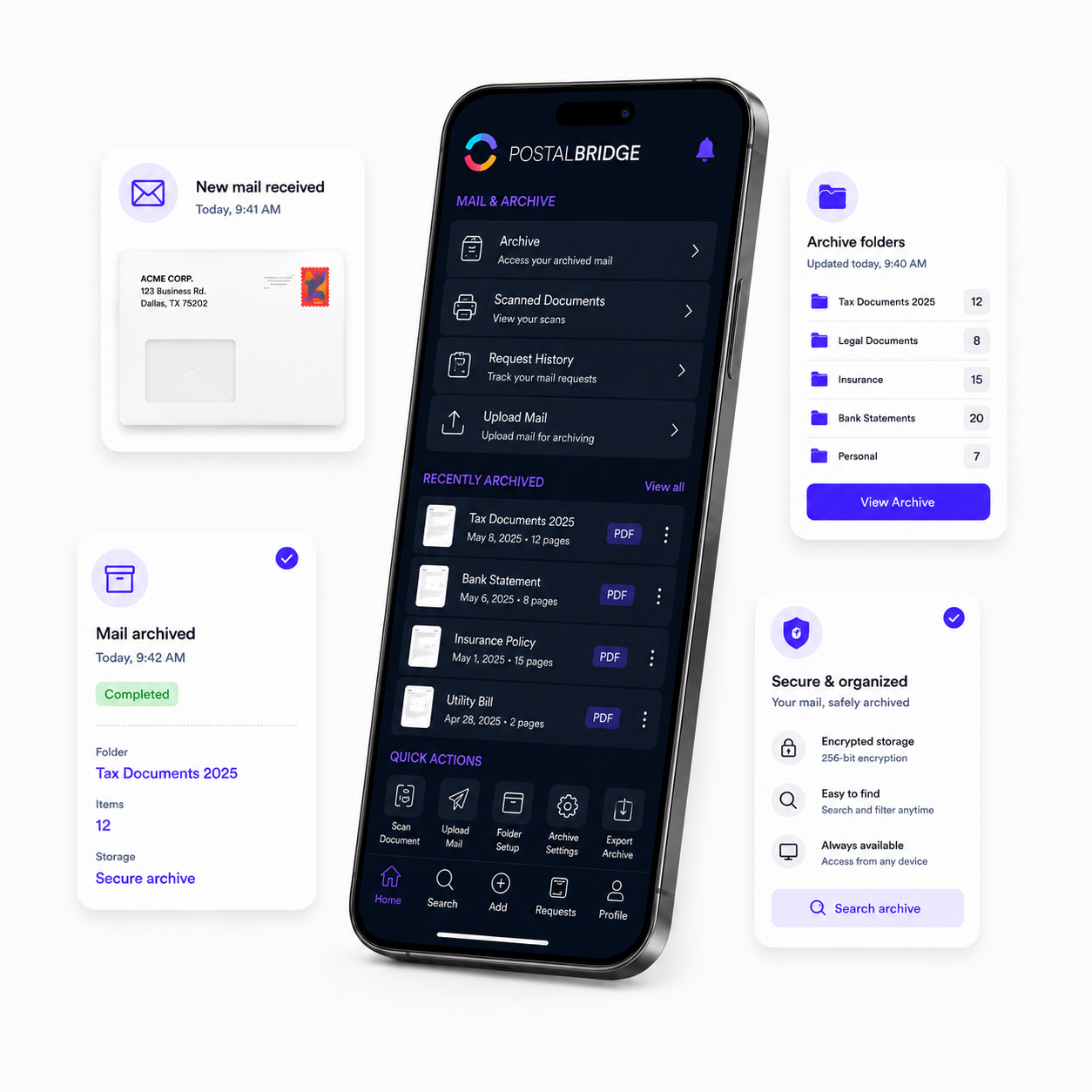
Track arrivals, scans, forwarding decisions, and mailbox history from one PostalBridge dashboard built for ongoing records.
Archiving is strongest when each item stays tied to the address, the scan, and the next action so teams can revisit what happened without rebuilding the trail.

Guided USPS setup
Complete mailbox authorization online with Form 1583 guidance.

Vetted partner locations
Choose from real mail centers set up to receive and handle mail.

30-day guarantee
Try PostalBridge risk-free. Get a full refund within 30 days.
Why choose Mail archiving
A useful mailbox is not just about what arrived today. It is also about being able to revisit what happened later without digging through disconnected records.
Tie scans, forwarding decisions, and arrivals to the same item record instead of scattering the history.
Confirm what arrived and what happened next weeks or months later without rebuilding context.
Archived history stays useful for compliance, bookkeeping, and ongoing operational mail.
Find the item, scan, and follow-up action without digging through disconnected files or messages.
Real mail centers. Real mail handling.
PostalBridge connects you with vetted partner mail centers that receive your mail, handle requests, and support your digital mailbox workflow.
Choose a real location, complete mailbox verification online, and manage your mail from anywhere.
Vetted partner mail centers
Your mailbox is tied to an authorized partner location reviewed for mail intake, handling, and customer support.
Online scans, forwarding, and pickup
View incoming mail, request scans, forward items, or pick up locally where supported.
Workflows tied to your selected location
Your address, plan, recipients, and handling options stay connected to the mail center you choose.

Real partner mail centers support the address and mail-handling workflow behind your digital mailbox.
Why mail archiving matters
A useful mailbox is not just about what arrived today. It is also about being able to revisit what happened later without digging through disconnected records.
Keep scan history and mail actions in one workflow
That makes it easier to understand what was received, reviewed, forwarded, or left in place.
Revisit important mail activity later without guessing
Searchable history matters when you need to confirm what happened with a document weeks or months later.
Support recurring business and compliance workflows
Archived mail history is especially helpful when multiple people need to understand past mailbox actions.
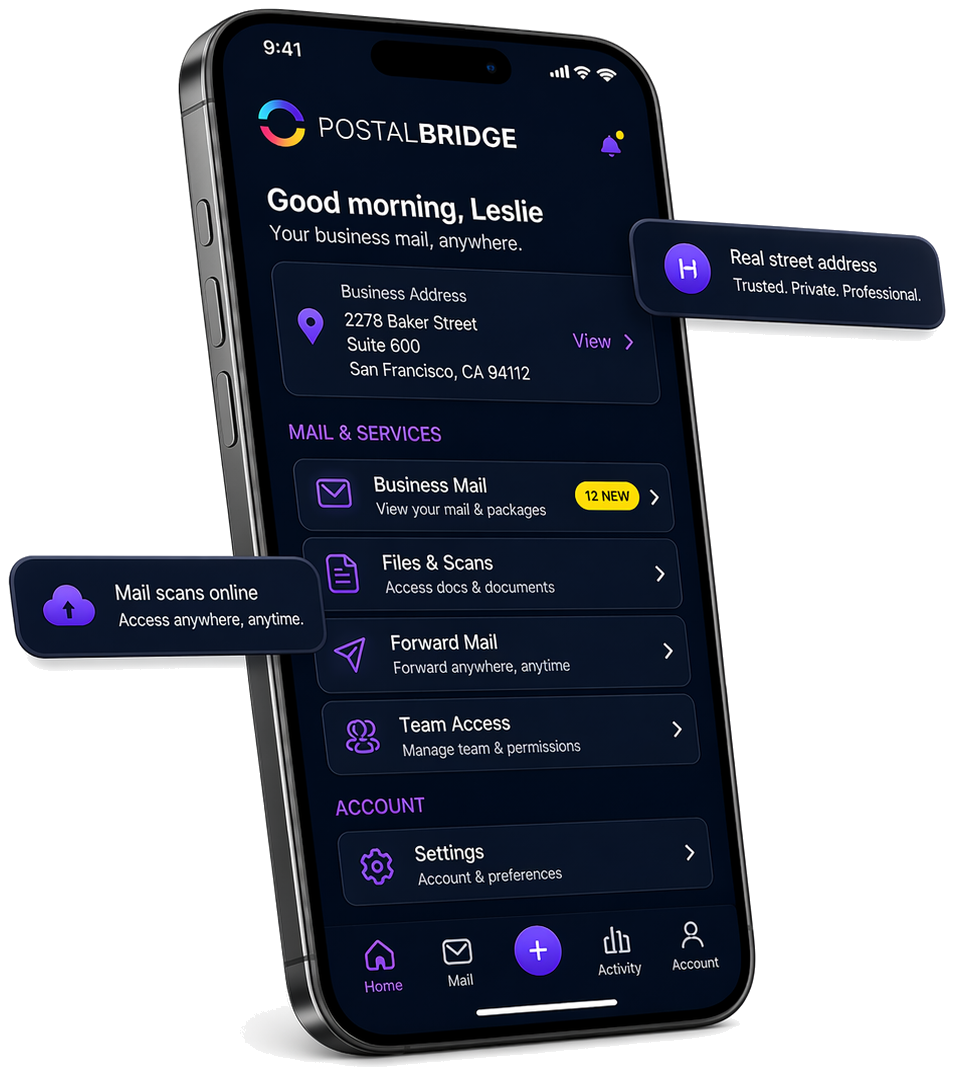
Get the real address, mailbox number, and next action in one place
Mailbox history becomes genuinely useful when the address, the item, and every action taken on it stay visible in one timeline.
Arrivals, scans, forwarding decisions, and stored records remain tied to the same mailbox timeline.
You can revisit which address received the mail, which item was acted on, and what happened next without piecing records together.
When someone needs to understand an older document, the archive preserves enough context to make the workflow understandable.
PLANS & PRICING
Need regular scanning or shredding?
30-day money-back guarantee
Try PostalBridge risk-free. If it's not the right fit, cancel within 30 days of your successful signup payment and we'll refund your original signup payment, excluding pass-through costs like shipping, deposits, and per-use fees.
Swipe or use the arrows to see every plan
* Postage/shipping billed separately.
Starter plans have lower monthly pricing. Overages and select add-ons are priced 20% higher than Basic and above.
Applies to all plans: 30-day storage included | Free discard on request | 48-business-hour processing SLA | Secure shredding available
What comes with your virtual mailbox
See new mail, follow requests, and manage your mailbox online. Add scans, forwarding, and other handling services only when you need them.
Included with every mailbox
- Mailbox dashboard
- Daily digest
- Request tracking
- Mobile/web access
Available when you need them
- Scans
- Shredding
- Forwarding
- Postage
- Package handling
- Pickup and storage where supported
Some Plus plans include monthly scan and shred credits. Other services are billed as used, with availability and pricing depending on your plan and location.
| Feature | What it helps you do | Good for |
|---|---|---|
| Mailbox dashboard | See activity, address details, package check-ins, and request history in one place. | Anyone who wants one clear view of mailbox activity. |
| Daily mail digest emails | Review new mailbox activity in an informed-delivery-style summary without constant manual checking. | Busy customers who want proactive visibility. |
| Scan requests | Turn important physical mail into digital documents you can review, download, or archive. | Time-sensitive documents and remote review workflows. |
| Forwarding requests | Send eligible mail or packages where you need them next, with tracking and clear handling steps. | Travel, relocation, or distributed teams. |
| Mail rules automation | Route repeat mail decisions into repeatable workflows such as flagging, scanning, or forwarding. | Customers with recurring sender or document patterns. |
| Mobile apps | Check mailbox activity, requests, and updates from the device you already use every day. | Customers who manage mail away from their desk. |
| Recipients/team access | Keep mailbox activity organized across approved recipients, family members, or teammates. | Households, businesses, and shared mail workflows. |
| Ticket-based support | Give you a clear path for activation, billing, request, and mail-handling questions. | Anyone who wants accountable support instead of guesswork. |
| Secure verification | Complete Form 1583 and identity checks with guided steps and secure document handling. | New customers activating a real mail-receiving mailbox. |
Customer stories
Built for people who can't miss important mail
Remote workers, travelers, families, and business owners use PostalBridge to stay on top of what matters without being tied to one address.

I can see what arrived and decide what matters without waiting for a pile of mail at home.
Forwarding is straightforward — I request it, track it, and move on. It’s one less thing to worry about.
The plan comparison makes it easy to choose a level that matches our team’s needs.
Mail archiving FAQ
Answers to the common questions about keeping mailbox history usable later.
Does archiving replace the physical mail?
Can I revisit past scans and actions later?
Who benefits most from mailbox history?
Should I still compare locations and plans?
Choose a mailbox setup that keeps the history usable later
Compare locations, review plan details, and choose a service setup that fits how often you need to revisit past mail activity.